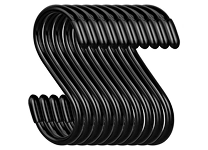
Industrial Hook Types and Common Applications
Industrial hooks connect, suspend, position, or secure loads in workplaces and equipment systems. Common options include eye hooks for permanent or semi-permanent connections, grab hooks for shortening chain, clevis hooks for pinned attachments, and slip hooks that allow a chain or sling to seat in a wider bowl. Swivel hooks rotate to help reduce twisting, while self-locking hooks use a latch to help keep a connection closed during handling. These designs appear in lifting assemblies, material handling, towing, conveyor systems, storage, and workshop setups. The right style depends on how the hook joins other hardware, whether the load needs to move, and how easily operators must attach or release it. On Ubuy, shoppers can explore international industrial hook products and compare design details for different applications.
- Eye, clevis, grab, slip, and swivel styles
- Options for lifting, securing, and material handling
- Choose by connection method and intended movement
Materials, Finishes, and Corrosion Resistance
Material selection affects strength, weight, wear resistance, and service life. Alloy steel hooks are widely used for demanding lifting and rigging tasks, while carbon steel versions suit many general-purpose applications. Stainless steel can be useful where corrosion resistance is important, although its suitability still depends on the grade, load, and operating conditions. Surface treatments such as galvanizing, plating, or powder coating may help protect against moisture, abrasion, or exposure to certain environments; a finish does not automatically make a hook suitable for every chemical or outdoor setting. Check the product specification for material grade, coating, and any stated environmental limitations. Industrial suppliers such as Crosby, Peerless, and Yoke offer hooks across rigging and lifting categories, but compare each model's documentation rather than relying on brand name alone.
- Compare alloy, carbon, and stainless steel
- Check coating suitability for the work environment
- Review the model specification and material grade
Working Load Limits, Ratings, and Safety Features
A hook's working load limit (WLL) indicates the maximum load specified for its intended use, but the complete lifting assembly is only as capable as its lowest-rated component. Match the hook rating to the load, chain or sling, connector, and lifting equipment, and account for the load's shape and how it will be applied. Side loading, shock loading, sharp edges, or an incorrectly seated attachment can affect safe use and may fall outside the manufacturer's stated conditions. Read markings and product documentation, including any applicable grade, size, and WLL information. Latches can help retain a connection but do not increase a hook's capacity or replace correct rigging practice. Before use, inspect for cracks, distortion, excessive wear, damaged threads, and latch problems; remove questionable hardware from service and follow qualified workplace procedures.
- Match WLL across every assembly component
- Avoid side loading and uncontrolled shock loads
- Inspect markings, hook shape, and latch condition
Sizing, Compatibility, and Hook Connections
Accurate sizing helps an industrial hook connect securely without restricting movement or concentrating force. Compare the hook opening, throat depth, bowl profile, pin diameter, and overall dimensions with the chain link, sling eye, shackle, or attachment point. A narrow throat may not fit a bulky connection, while an oversized opening can allow an attachment to shift into an unsuitable position. Clevis hooks need compatible chain dimensions and a correctly secured pin; eye hooks require an appropriate connector and installation method. Swivel designs should be selected for applications that need rotation, with the product's rating and operating instructions checked for the intended direction of loading. When browsing international products on Ubuy, use dimensions and technical specifications to assess fit instead of choosing by appearance or nominal size alone.
- Compare throat opening, bowl, and pin dimensions
- Confirm compatibility with chain, sling, or connector
- Use specifications to distinguish similar sizes
Installation, Inspection, and Maintenance
Correct installation and routine inspection help keep industrial hooks dependable in service. Follow the manufacturer's instructions for attaching the hook, securing pins, and orienting the load; do not modify, weld, heat, or bend a hook unless the manufacturer expressly permits it. Keep contact surfaces clean enough to reveal wear, and store hardware in a dry, organized location appropriate to its material and finish. Inspection frequency should reflect duty cycle, environment, and workplace rules. Look for deformation, corrosion, cracks, worn bearing points, loose or damaged pins, and latches that fail to close properly. Keep records when required by site procedures and have uncertain or damaged components assessed by a qualified person. Replace a hook when its markings are unreadable or its condition no longer meets the applicable instructions; maintenance cannot restore compromised load capacity.
- Install and secure components as directed
- Inspect for wear, deformation, corrosion, and damage
- Remove suspect hardware from use for assessment
Select the Right industrial hooks
Start with the task: identify whether the hook will lift, tow, anchor, suspend, or organize a load, then determine the connection style and movement required. Establish the load weight and select a WLL suitable for the complete assembly, following the equipment maker's guidance and applicable workplace procedures. Next, verify dimensions and compatibility with chain, wire rope, web slings, shackles, or machinery attachment points. Consider material and finish in relation to moisture, abrasion, temperature, and other environmental factors. Decide whether a latch, swivel, or locking feature is useful, and check that it is designed for the intended application. Compare technical documents, markings, and inspection requirements before ordering. Ubuy can help shoppers discover international industrial hooks; careful specification checks support a more informed choice for maintenance, production, warehouse, and rigging needs.
- Define the task, load, and required connection
- Verify dimensions, rating, material, and features
- Compare documentation before purchasing