Industrial Hinges for Heavy-Duty Doors and Equipment
Industrial hinges connect doors, lids, panels, gates, and machine enclosures to their frames while supporting repeated movement and substantial loads. Compared with standard cabinet hinges, they are selected for factors such as door weight, operating frequency, vibration, exposure, and the consequences of a failure. The category includes butt, continuous, concealed, weld-on, lift-off, and spring-loaded designs, each suited to different mounting and access requirements. Some models prioritize corrosion resistance, while others provide adjustable positioning, controlled closing, or restricted access. Understanding these differences helps narrow a broad product range to hardware that fits the application. Ubuy provides a platform for discovering industrial hinge products from international sellers, with product details that shoppers can review while comparing styles, dimensions, and intended uses.
- Designed for repeated operation and demanding loads
- Available in multiple mounting and movement styles
- Compare dimensions, capacity, and environment
Common Industrial Hinge Types and Mechanisms
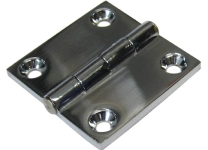
Butt hinges are familiar two-leaf designs used on many access doors and enclosures; their pin may be fixed, removable, or designed for security. Continuous, or piano, hinges run along much of a door edge to distribute support and reduce localized strain. Concealed hinges keep hardware out of sight when closed, while lift-off hinges allow a door to be removed without unscrewing the leaves. Weld-on hinges suit metal gates, machinery, and fabricated frames where permanent attachment is appropriate. Spring hinges assist closing, and torque or friction hinges hold a panel at a chosen angle. Detent hinges offer set stopping positions, while adjustable models help installers align a door. Recognizing these mechanisms makes it easier to match access, clearance, and operation needs.
- Butt, continuous, concealed, and weld-on styles
- Lift-off designs support removable access panels
- Spring, torque, and detent mechanisms control movement
Materials, Finishes, and Corrosion Resistance
Hinge material affects strength, weight, wear, and suitability for the surrounding environment. Stainless steel is commonly considered for damp, washdown, or corrosive settings; grades and finishes should be checked against actual exposure. Carbon steel can provide robust support in indoor or protected installations, often with a plated or coated finish. Aluminum offers a lighter option for enclosures and applications where reducing weight matters. Brass and engineered polymers appear in specialized hardware where appearance, electrical isolation, or particular friction characteristics are relevant. Surface treatments such as passivation, zinc plating, and powder coating can add protection, but they are not interchangeable. Check whether the hinge, pin, and fasteners share compatible materials to limit galvanic corrosion. Ubuy product listings can help shoppers compare stated materials, finishes, and construction details across international products.
- Choose material for load, weight, and exposure
- Review finish details rather than relying on appearance
- Consider pin and fastener material compatibility
Load Capacity, Dimensions, and Functional Features
A suitable hinge must support the complete door or panel assembly, including attached hardware and forces created during opening. Published load ratings may depend on hinge count, spacing, mounting orientation, and test conditions, so compare specifications carefully instead of treating a rating as universal. Measure leaf length and width, thickness, knuckle or barrel dimensions, pin diameter, hole pattern, and closed clearance. Opening angle, handedness, offset, and required swing direction also affect fit. For moving equipment, consider vibration, impact, cycle frequency, and whether a retaining or locking feature is needed. Sealed bearings or bushings can reduce wear in some designs, while lubrication requirements vary by construction. Confirm that the hinge geometry leaves room for seals, cables, adjacent panels, and the intended fasteners.
- Check load ratings and their stated conditions
- Match hole patterns, clearances, and opening angle
- Account for vibration, cycle frequency, and attached weight
Industrial Hinge Applications, Installation, and Care
Industrial hinges are used on control cabinets, electrical enclosures, machine guards, toolboxes, access doors, vehicle bodies, storage systems, and fabricated gates. The right design depends on how often access is needed, whether a panel must lift away, and how the assembly interacts with nearby components. Before installation, verify alignment, frame stiffness, fastener type, and the manufacturer's mounting instructions; welding should be performed using methods appropriate to the hinge and base material. Misalignment can create binding, uneven wear, or extra stress on the pin. During maintenance, inspect for loosened fasteners, corrosion, cracks, excessive play, and damaged coatings. Clean away debris and apply lubricant only where the product guidance calls for it. Replace worn hardware when safe operation or secure closure can no longer be maintained.
- Used across enclosures, machinery, vehicles, and gates
- Correct alignment helps prevent binding and excess wear
- Inspect fasteners, pins, surfaces, and movement regularly
Select the Right industrial hinges
Start with the door or panel dimensions, total weight, material, and mounting surface, then identify the required opening angle and access pattern. Decide whether the hinge should remain visible, support a removable door, close automatically, or hold a panel open. Compare load specifications alongside hinge spacing and installation conditions, and allow for vibration, impact, temperature, moisture, and cleaning exposure where applicable. Check handedness, pin security, mounting-hole layout, fastener compatibility, and clearance before ordering. For specialized machinery or enclosures, consult technical drawings and confirm that the chosen hardware does not interfere with seals, wiring, guards, or adjacent equipment. Brands such as Southco, Sugatsune, Häfele, and McKinney are associated with architectural and industrial hardware, but specifications vary by model. Ubuy offers a place to discover international industrial hinge options and compare available product information before making a selection.
- Match hinge type to access and operating needs
- Verify installation details and environmental conditions
- Compare model specifications before purchase