Build a Strong Foundation in Classroom Measurement
Science classroom measurement kits bring together practical tools that help students turn observations into data. Depending on the intended lessons, a kit may include rulers, meter sticks, balances, thermometers, graduated cylinders, measuring tapes, stopwatches, or electrical meters. These supplies support work in physics, chemistry, biology, earth science, and general STEM, from measuring an object's dimensions to recording temperature changes or comparing mass. A coordinated set can make it easier to introduce units, estimation, precision, and repeatable procedures across a class. Look for equipment suited to the students' age, the curriculum, and the level of detail required. Ubuy can help shoppers discover international science and classroom products, making it useful to compare kit contents and specifications before choosing.
- Tools for hands-on science lessons
- Supports measurement skills and data collection
- Options for different subjects and grade levels
Explore Measurement Kit Types and Components
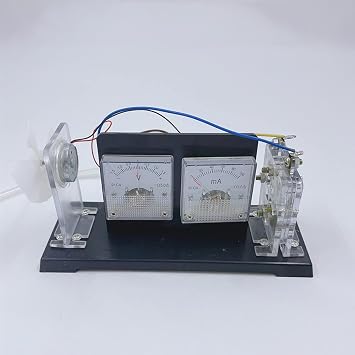
Classroom measurement sets vary from basic physical science assortments to focused kits for a particular experiment or subject. Length and geometry tools can include rulers, calipers, protractors, and measuring tapes; mass activities may use beam or digital balances with calibration weights. For liquids and temperature, students may work with graduated cylinders, beakers, laboratory thermometers, or probes. Timing and motion investigations can call for stopwatches, pendulums, and distance markers, while introductory circuits may use multimeters to read voltage, current, or resistance. Some kits combine several instrument types with storage cases, worksheets, or experiment materials. Check the itemized contents rather than relying on a broad product title, and consider whether components are supplied individually or in quantities appropriate for small groups, demonstrations, or full-class activities.
- General-purpose and subject-specific assortments
- Tools for length, mass, volume, and time
- Check component counts and included accessories
Compare Accuracy, Scale, and Measurement Features
The right instruments depend on the measurements students need to make and interpret. Readability describes the smallest scale division or displayed increment, while accuracy and repeatability relate to how closely readings reflect a reference value and how consistently results can be reproduced. Analog scales are useful for teaching graduations and estimation; digital displays can simplify reading, but students still need to understand units and measurement limits. Review ranges, units, resolution, and any stated calibration or adjustment procedures for each tool. Material choices also matter: clear plastic or glass vessels help students view liquid levels, while sturdy rulers and cases can better suit frequent classroom handling. For electrical or temperature probes, confirm the supported measurement modes and connection type. Brands such as Vernier, PASCO, and Ohaus are associated with educational or laboratory instruments; compare specific product details rather than brand name alone.
- Review range, units, and scale increments
- Choose analog or digital displays for the lesson
- Check materials, probes, and calibration needs
Use Measurement Kits Across STEM Lessons
Measurement activities can connect classroom concepts with practical investigation. Students might measure the length and mass of objects, calculate density, compare the temperature of samples, track a moving object over time, or record environmental observations. In chemistry, volume and temperature readings help structure experiments; in physics, distance, time, and force measurements support motion and energy lessons. Biology activities can involve dimensions, mass, or changes in conditions, while earth science projects may collect observations over repeated intervals. A well-matched kit encourages students to record units, distinguish measured from calculated values, and compare results among groups. Teachers can also use demonstrations to model safe handling and consistent techniques before independent work. Consider whether instructions, data sheets, or experiment guides are included, or whether lesson materials will be prepared separately to suit the class.
- Connects measurement with real investigations
- Useful across physics, chemistry, and biology
- Encourages unit use and consistent data recording
Check Compatibility, Storage, and Care
Before purchasing, match the kit to the learning environment and the equipment already in use. Confirm that probes, cables, adapters, or software interfaces work with the instruments and classroom devices students will use. If lessons require data logging, check supported sensors and connection methods; for basic activities, standalone tools may be simpler to distribute. Consider how many students will share each kit, whether duplicate instruments are needed, and how components will be organized between lessons. Durable cases, labeled compartments, and replacement parts can help with storage and routine handling. Follow the manufacturer's cleaning, calibration, and storage guidance, especially for balances, electronic meters, glassware, and sensors. Ubuy offers a way to discover international products in this category; review specifications, included accessories, and care instructions closely so the selected assortment fits classroom routines and planned experiments.
- Confirm device and sensor compatibility
- Plan for group size and organized storage
- Follow care and calibration instructions
Select the Right science classroom measurement kits
Start by listing the measurements students will perform, the subjects involved, and the level of precision expected. Then compare kit contents against lesson plans: a general classroom set may cover foundational activities, while a specialized assortment can provide instruments for deeper work in areas such as electricity, motion, or laboratory analysis. Check quantities, measurement ranges, units, readability, construction materials, included accessories, and whether instructions are supplied. Also consider student age, ease of use, safe handling, storage, and compatibility with existing sensors or data systems. If choosing between analog and digital tools, think about whether the priority is practicing scale reading, collecting readings efficiently, or both. On Ubuy, shoppers can explore international science classroom products and compare the listed specifications. A clear checklist helps narrow options to a kit that supports the intended curriculum and can be used consistently over time.
- Match kit contents to planned experiments
- Compare specifications and classroom quantities
- Choose for usability, care, and future lessons