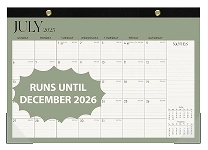
Calendar Planner Organizer Books for Everyday Planning
Calendar planner organizer books combine dated calendars with space to record appointments, tasks, goals, and notes. They help bring work, study, household routines, and personal commitments into one place, making it easier to see what needs attention and when. Depending on the design, a planner may cover a week, month, or full year, with pages for daily schedules, project lists, meal planning, habit tracking, or reflections. Common options include compact pocket diaries, academic planners, business organizers, family planners, and undated books that can be started at any time. Some shoppers prefer a simple calendar with writing room; others want structured prompts and multiple planning tools. Ubuy offers a place to discover international calendar planner organizer books and compare formats, layouts, and features for different planning styles.
- Dated and undated formats
- Layouts for work, school, and home
- Planning space for tasks and notes
Planner Formats, Sizes, and Binding Styles
The right format depends on how and where a planner will be used. Daily planners provide generous writing space for detailed schedules, while weekly layouts offer a quick view of appointments and priorities. Monthly calendars make long-range planning and deadline tracking straightforward, and daily, weekly, and monthly combinations support both close-up and future planning. A5 and letter-size books suit desk use or detailed notes; smaller pocket and personal sizes are easier to carry. Binding also affects convenience: spiral and wire-o designs can lie flat, while stitched or casebound books may feel more like traditional journals. Disc-bound systems can make pages removable or rearrangeable when compatible accessories are available. Compare page dimensions, weight, opening style, and portability with your routine, since a planner is most useful when it is comfortable to keep within reach.
- Daily, weekly, and monthly views
- Portable or desk-friendly sizes
- Spiral, bound, and disc-bound options
Page Layouts and Planning Features
Page design shapes how quickly information can be captured and found again. Vertical time-blocking columns suit people who plan by the hour, while horizontal weekly spreads leave room for a mix of events and written reminders. Grid and lined pages support lists, sketches, or flexible notes; blank pages can be useful for custom schedules and brainstorming. Look for practical features such as monthly tabs, reference calendars, goal-setting pages, priority markers, checklists, and dedicated notes sections. Academic planners may include term dates and class schedules, while professional organizers can provide project tracking, meeting notes, and deadline planning. Undated pages offer flexibility if a planner is not used every day, though dated books make it faster to locate a specific day. Choose features that match real habits rather than adding complexity that may go unused.
- Time-blocking and flexible spreads
- Goal, project, and notes pages
- Tabs and reference calendars
Paper, Cover, and Useful Planner Details
Materials and construction influence writing comfort, durability, and day-to-day handling. Paper thickness and surface texture can affect how pens, pencils, and markers feel on the page, so consider the writing tools you typically use. If avoiding ink show-through matters, check product details for paper weight or manufacturer guidance; performance can vary by pen and pressure. Hardcover covers offer structure in a bag, whereas flexible covers can reduce bulk. Elastic closures, ribbon bookmarks, pen loops, pockets, and reinforced corners are useful details for keeping pages and loose notes together. Some planners include stickers, removable inserts, or matching notebooks, while others keep the design minimal. When browsing Ubuy, compare listed specifications and images to understand the format and included accessories, and check whether refill pages or compatible add-ons are relevant to the organizer system you prefer.
- Paper suited to everyday writing
- Hard and flexible cover choices
- Pockets, bookmarks, and pen loops
Using Planners for Work, Study, and Home
A calendar organizer can support different routines without needing a complicated system. For work, record meetings, due dates, project milestones, and follow-up actions; a weekly spread with notes space can keep commitments and next steps visible together. Students may use academic calendars to track classes, exams, assignments, and study sessions. At home, family planners can coordinate appointments, activities, chores, and meal plans, especially when each person has a dedicated column or color. Goal pages and habit trackers help turn longer-term intentions into regular check-ins, while a notes section can hold lists and ideas that do not belong on a particular date. Accessories such as sticky notes, page flags, and compatible inserts can add flexibility. A brief weekly review helps keep plans current and makes it easier to carry forward unfinished tasks without losing sight of priorities.
- Track deadlines and appointments
- Coordinate family and study schedules
- Use reviews to refresh priorities
Select the Right calendar planner organizer books
Start by deciding whether you need a dated or undated planner and how much detail you want to write each day. Choose daily, weekly, monthly, or combined layouts based on your schedule, then compare page size with portability and writing space. Consider whether structured sections—such as goal pages, habit trackers, project plans, or meal planning—will genuinely support your routine. Check binding style, cover construction, paper details, and practical extras such as tabs, a pen loop, or storage pockets. If you use a particular pen or planner system, look for product information about paper performance, page dimensions, and accessory compatibility rather than assuming components will fit. A clear view of your priorities makes comparison easier. Ubuy can help you explore international planner books and related organizer styles, so focus on the features that suit your planning habits and the way you prefer to carry or use a book.
- Match layout to planning habits
- Compare size, paper, and binding
- Check included and compatible accessories